Tuesday, 1 November 2011

How Do Juicers Help Us Absorb More Nutrients From Our Food?

!±8± How Do Juicers Help Us Absorb More Nutrients From Our Food?

If you have read about juicers you might have heard how they can help us absorb and digest our food so we get more nutrients. Have you ever stopped to think about how this actually works? I mean how does a machine that crushes and squeezes our food make it easier for us to digest it?

To start, let's go back to a bit of biology here. Don't worry this won't be a boring lesson like in school. It will apply some simple knowledge about our bodies so we can see how juicers work.

Like us, plants are made up of thousands of tiny cells. Inside these cells are the nutrients we need like water, protein, carbohydrates, and vitamins. When we eat a vegetable we are using several processes, both mechanical and chemical, to break down these cells and extract the nutrients. The mechanical processes crush the cells and rupture the cell walls, like biting into a grape. The chemical processes dissolve the cells and release the nutrients, like how bleach can eat through cloth. Once the nutrients are separated from the cells our bodies are able to absorb them in our digestive system. The more efficiently these processes extract the nutrients, the more nutrients our body will be able to absorb.

One of the most powerful mechanical processes is done in our mouth when we chew. Our teeth and jaws combines to exert a crushing and grinding force that breaks apart our food. This separates the cells in the plant into smaller groups and will actually break open a few cells in our mouth. If you ever bit into a ripe apple and spilled juice on your shirt, this is because you broke apart some of the apple's cells and they spilled out of our mouth.

Now that we know that our mouth is grinding and crushing our food, lets apply that to juicers. Juicers are a machine that uses a mechanical process (like our mouths) to process whole food by slicing it with tiny blades, crushing it between gears, and squeezing it through tiny screens. At the end of this process the juice pours out of one section of the juicer and the rest of the food is released into another section (called the pulp). This mechanical process is almost identical to what happens in our mouth but it all happens without us putting in the work. You can think of juicers as a second mouth, one that pre-chews the food for you.


How Do Juicers Help Us Absorb More Nutrients From Our Food?

Grow Lights T5 Clearance Sale Top 10 Metal Queen Headboards

Friday, 21 October 2011

Welles or Peoples Juice Press

!±8± Welles or Peoples Juice Press
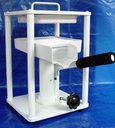
Brand : Samson Brands | Rate : | Price : $399.00
Post Date : Oct 21, 2011 21:21:06 | Usually ships in 1-2 business days


The Welles Juice Press (also known as the Peoples Juice Press) extracts juice containing high levels of nutrients from fruit and vegetables by pressing (squeezing) pulp. The nutrients and juice are forced out of the pulp fibers when pressed using 2 tons of pressure. The pressure exerted by this pressing method is thought to release extra nutrients and enzymes that would otherwise 'adhere' to the pulp and left behind by juicing machines. The Welles is made from white powder-coated steel and has a stainless steel splash plate. The drip tray is made of a specialized non-leaching plastic designed for use with foods. This is a manual juice press that works by placing the fruit and vegetable pulp from a juice extracting machine, such as Samson 6-1 or Green Power KPE, juicers. You can use left over pulp for the juicing process or just us the juicer to make pulp with the appropriate attachment. The pulp is placed into a pressing cloth, 2 are supplied with the Welles Press, the cloth is folded and placed on the drip tray. The tray is raised using the jack handle, pressing the clothe between the juicing plate and the drip tray.. When the pressing cloth containing the pulp is squeezed between the tray and the pressing plate the juice and nutrients are extracted from the pulp and flow off the drip tray into a bowl or other catcher (not included). You can also use the Welles Press with whole produce such as grapes by placing them directly into the pressing cloth. Cleaning the Welles - Peoples Juice Press is simple, just slide the tray out along with the press plate and rinse it in warm water. Rinse the pressing cloth and store it in the freezer to keep it sterile.... Pressing Reclaims Lost Nutrients from Vegetable Pulp - The pulp from organic vegetables is too valuable to be discarded. Pressing actually releases vitamins, minerals and enzymes that literally "bind" to the pulp. The hydraulic press separates the bio-available nutrients that act as powerful hea

More Specification..!!

Polk Lsi7 Discount

Saturday, 15 October 2011

Gerson Therapy - Cancer And Other Degenerative Diseases: Which Is The Best Juicer

!±8± Gerson Therapy - Cancer And Other Degenerative Diseases: Which Is The Best Juicer

Dr. Max Gerson, described by Albert Schweitzer as "one of the most eminent geniuses in the history of medicine", created the famous Gerson Therapy that is based around the regular consumption of fresh, organic juice. Dr. Gerson discovered that the regular intake of juice provides a superdose of enzymes, minerals and nutrients to the body, thereby allowing the body to cleanse and reactivate itself. Gerson Therapy has been successfully used for more than 60 years to cure "incurable" diseases, cancer and other degenerative diseases.

What juicers should not be used with Gerson Therapy?

Dr. Gerson discovered early on that blenders, liquidizers and other centrifugal types of juicers were not suitable when it came to producing the juice needed for the Therapy. This was for two reasons. Firstly, the high speed rotation of the blades created a "dynamo effect" where the resultant electrical energy destroyed some of the enzymes. Secondly, this kind of juicer combines the pulp of the fruit or vegetables with the juice. This creates additional bulk that is very difficult for a patient to consume when drinking juice the required thirteen times per day.

So, what is the best juicer for Gerson Therapy?

The preferred juicer for Gerson Therapy is the Norwalk Juicer. The Norwalk is a two-stage juicer where the vegetables or fruit are ground into a pulp. This pulp is then pressed under very high pressure using the built-in hydraulic press to extract the juice. The juice is of a very high quality and contains the maximum amount of enzymes, minerals and nutrients.

The Norwalk Juicer is expensive, is there another option?

The Norwalk Juicer, while very effective, is not a cheap option with the cost around the 00 mark. Fortunately there is a cheaper option that offers the same benefit as the Norwalk: the Champion 2000+ Juicer. The Champion Juicer is a low-speed, masticating juicer that can produce pulp as the output, rather than juice. This pulp is then put into a separate press which is used to extract juice that is of a similar quality to the Norwalk Juicer. The cost of the Champion 2000+ Juicer and a manual press is around 0 to 0 depending on the model of juicer and the type of press used.

A cautionary note

While it may be tempting to use a cheaper, centrifugal-style juicer, Dr. Gerson noted specifically that there was very little benefit to his Therapy when these were used. If Gerson Therapy is to be followed, and it is a commitment, then it is worthwhile making sure that it is effective as possible. It is also worth noting that using a manual press, such as the kind normally paired with the Champion 2000+ Juicer, requires a level of physical effort that a patient or elderly person may find difficult or impossible.


Gerson Therapy - Cancer And Other Degenerative Diseases: Which Is The Best Juicer

Catalog Kettler Tennis Tables Purchasing Bumbo Seat